Vincent Treder on developing a modular Unreal toolkit
02/27/2026 - 13:40

- Stories
- Student work
What led you to study CMGT and pursue game development?
Vincent: ‘I grew up in Germany, and games were always a big part of my life. I was interested in them for a long time, but more as a player at first. Around the age of 15, I started watching a lot of videos about game development and taking notes on design principles. I didn’t really build full games back then, apart from a small project in computer science at school, but I knew I wanted to work in games professionally.’
‘After graduating from high school in 2023, I took a gap year. I worked at a gym and focused on preparing my intake for BUas. I wanted to give that process my full attention instead of combining it with my final school exams. I applied early in January 2024, had my interview in February and was accepted shortly after. I moved to the Netherlands in August and started the programme in September. From the first year onwards, I really enjoyed it.’
Can you describe the Unreal Engine project you developed individually?
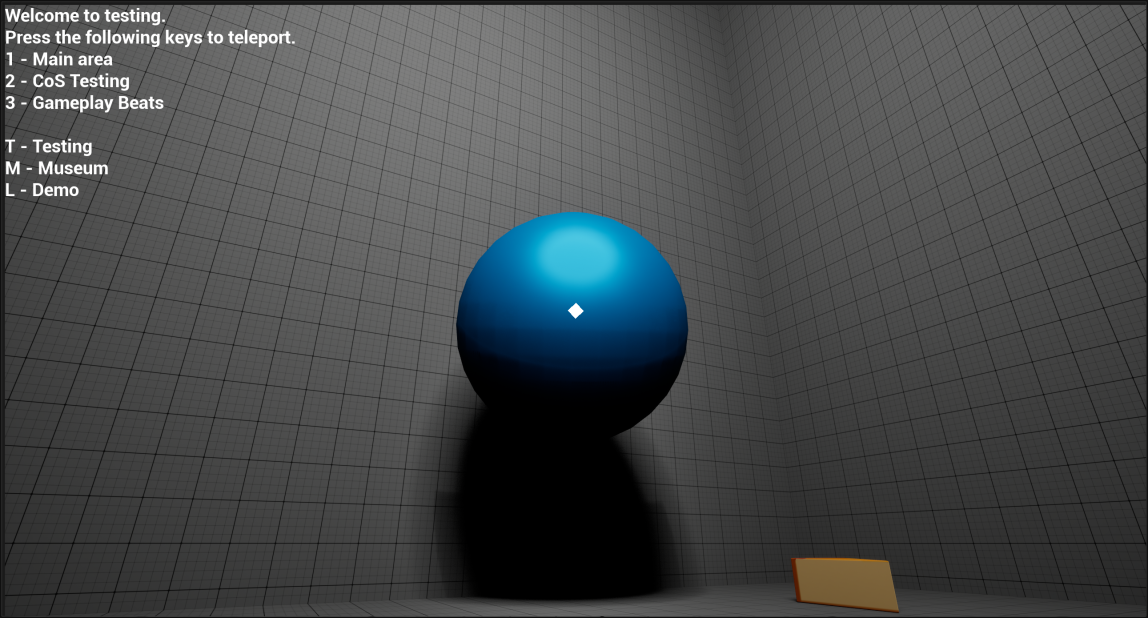
Vincent: ‘In one of our Year 2 blocks, we had to recreate a specific game mechanic in Unreal Engine and make it modular so that other developers could easily use it in their own projects. While it wasn’t a requirement, I had the idea to publish the final result on Fab, the Unreal Engine marketplace.’
‘I chose to recreate the forced perspective mechanic from the game Superliminal. It plays with perspective in a way similar to those photos where people appear to hold the Leaning Tower of Pisa in their hands. In the game, when you pick up an object, you can resize it depending on how you look at it. It’s a very specific mechanic, but there’s a lot of technical and design thinking behind making it work smoothly.’
‘The project was quite research-heavy. I downloaded several existing implementations to analyse how they functioned. A lot of them were what we call “spaghetti code”, not well structured or documented. So I studied them, chose the most efficient method and rebuilt it in a clean, modular way. I focused on performance, high frame rate and making sure that other developers could integrate it easily into their own projects.’
What were the main challenges during this project?
Vincent: ‘The biggest challenge was scope. At the start, it’s intimidating because you can theoretically recreate almost any mechanic. That freedom is exciting but also risky. It’s very easy to overscope. I initially considered adding more features, but I realised that focusing on one mechanic and polishing it properly would lead to a better result.’
‘The pacing was also quite intense. The block lasted eight weeks and was divided into phases: pitching, research, development and documentation. In some weeks the balance felt tight, especially between research and development. But in the end, it worked out well, and I had a lot of fun.’
‘I actually enjoyed the research aspect a lot. It gave me more freedom compared to Year 1, where you’re introduced to many topics within tighter boundaries. This block felt more open and exploratory.’
You also worked on Resonance in Year 1, which received award recognition. What was that experience like?
Vincent: ‘Yes, I worked as a producer on Resonance in Year 1. It was one of the most enjoyable projects so far. I did some UI design work as well, but mainly focused on production; organising, facilitating and keeping an overview. I also submitted the game to the Dutch Game Awards, which involved completing an extensive submission form as part of the process.’
‘We were nominated for the Dutch Game Awards, which was a huge achievement, especially as a first-year team. I don’t think there was one specific thing we did perfectly; it just came together really well. We had a strong team dynamic and a clear structure, and that made a big difference. We’re planning to release the game on Steam in the coming months, which will be great for our portfolios.’
What are you working on at the moment?
Vincent: ‘Currently, I’m in a team of seven working on a sustainability-focused project. We’re collaborating with BUas professor Frans Melissen as our client and developing a game concept that can be used in a classroom setting to spark discussions about sustainability.’
‘Right now, we’re in the concepting phase. We’re exploring the possibility space, defining rough goals and building early prototypes. If the project gets greenlit, we’ll continue development in the next block. It’s very different from the individual Unreal project, because now it’s all about finding common ground.’
You often take on the role of producer. Is that where you see your future?
Vincent: ‘Yes, definitely. I really enjoy organising, structuring and facilitating a team. As a producer, you schedule meetings, maintain oversight and support everyone so they can focus on their tasks. That role suits me well.
'In a AAA studio, the role is usually very specialised, focused entirely on production. In indie or AA studios, there’s often more flexibility and overlap with design. I’m open to exploring both environments.’
‘Long term, I’d like to move back to Germany. My girlfriend and I have talked about Hamburg, which has a strong game development scene. For now, I want to try different environments, learn as much as possible and see where it leads.’
Connect with Vincent Treder on LinkedIn:
https://www.linkedin.com/in/vincent-treder-177190264/