The making of Resonance: A conversation with student Michal Pikulski

The making of Resonance: A conversation with student Michal Pikulski

02/17/2026 - 12:25

Michal Pikulski is a second-year Creative Media and Game Technologies (CMGT) student at Breda University of Applied Sciences (BUas), following the Design & Production track. From early experiments in game creation to showcasing an award-nominated project at the Dutch Game Awards, Michal is steadily carving out his path in the games industry. We spoke to him about his journey so far, the standout project Resonance, and his ambitions for the future.
Games
  • Stories
  • Student work

What drew you to studying at BUas? 

Michal: ‘There were two main reasons. First and foremost, a genuine passion for games and the creative process behind them. I actually started learning software development by creating very simple games. That playful experimentation was what really got me excited about building interactive experiences.’ 

‘The second reason was burnout. I studied programming for five years at a technical college in Poland, where I qualified as a technician programmer. We worked on seven or eight quite demanding projects, mostly focused on web and computer applications. By the fourth year, I realised I needed a creative outlet. Traditional software development no longer fulfilled me in the same way, so I decided to shift towards game development.’ 

‘I found out about BUas through a friend from my hometown who was already studying here. I applied, and it turned out to be a great fit.’ 

Which games have inspired you the most? 

Michal: ‘Growing up, Minecraft was a huge inspiration for me. The freedom, the creativity, the sense of playfulness, it showed me that games could be spaces where you invent your own stories and mechanics. That idea of creating playful systems really stuck with me.’ 

‘Today, I’m also inspired by large-scale, high-quality titles. Games like Baldur’s Gate 3, Clair Obscur: Expedition 33 and Witcher 3 show what’s possible in terms of depth, narrative and polish. They set a benchmark for quality, but I still carry that childhood inspiration of freedom and experimentation with me.’ 

Can you describe the project you've been working on? 

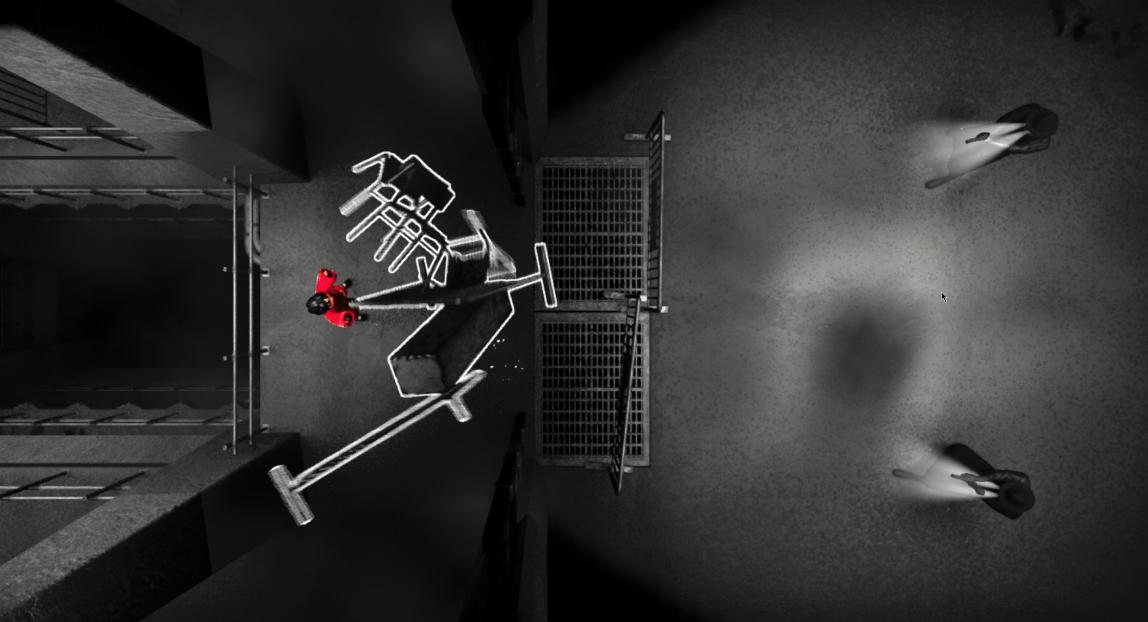
Michal: ‘Our most recent major project was our game Resonance. The assignment was to choose one of fourteen reference games and use it as a core foundation, then iterate on it and make it our own. We collaborated across disciplines, designers, programmers and artists, each building on the base concept with our own research and systems.’ 

‘In simple terms, the game can be summarised as: a girl with a supernatural voice throwing concrete at the fascists. That became our “selling line”. The project explores a very visceral gameplay loop, set within an oppressive facility where the protagonist is trying to break free. It’s intense, emotional and focused on physical interaction with the environment.’ 

Can you walk us through the development process and your role? 

Michal: ‘I worked as a level designer. My responsibility was to design the playable spaces, laying out the architecture, shaping how the player moves, and ensuring the gameplay systems were supported by the environment.’ 

‘I collaborated closely with environment artists. While I focused on gameplay functionality, object placement, and spatial design, they worked on atmosphere, theme, and visual storytelling. I also researched oppressive architecture, what makes a space feel restrictive or intimidating, and shared references with the team. Together, we shaped a facility that genuinely felt like a prison.’ 

‘The team consisted of eleven people: four designers, four artists and three programmers. Collaboration was one of the biggest challenges. In game development, creative visions can clash, and we had to constantly align on scope and priorities. Thanks to our producer, Vincent Treder, we managed to keep the vision consistent and avoid over-scoping. That discipline made a huge difference.’ 

How was Resonance received by players and the industry? 

Michal: ‘The response was overwhelming. Resonance was nominated for the Dutch Game Awards, which was incredible for a first-year project. We attended the ceremony, connected with industry professionals and saw our game featured on a massive screen.’ 

‘During Dutch Game Week, we had the opportunity to showcase the game at a conference. Players responded very positively to the emotional intensity and dynamic gameplay. We also received constructive feedback about areas that could be improved, fluidity, consistency and certain mechanics.’ 

‘Because of the nomination, we’ve been given the opportunity to release the game on Steam, which is usually reserved for third-year projects. We’re currently refining and polishing the experience ahead of its release.’ 

Play Resonance here: https://buas.itch.io/resonance 

What did you learn from this project? 

Michal: ‘Collaboration was the biggest lesson. I had worked in teams before, but game development is different because it’s such a creative process. We had to manage differing visions, communicate clearly and constantly evaluate scope.’ 

‘We learned how important it is to prioritise and stay realistic about time constraints. It’s tempting to keep adding features, but without focus you risk not finishing properly. Keeping everyone aligned on the core vision was essential.’ 

What are your future plans in Games? 

Michal: ‘At the moment, I’m still exploring whether I want to specialise deeply or remain more flexible as a designer. Indie and mid-sized studios really fascinate me. They tend to be more innovative and emotionally bold, even on smaller budgets. Ideally, I’d like to gain experience in a AAA company first, develop strong expertise, and then potentially move into indie or mid-sized studios where I can have a broader creative impact.’ 


Connect with Michal: https://www.linkedin.com/in/piqulsky/